
Property Prices in Crystal Palace
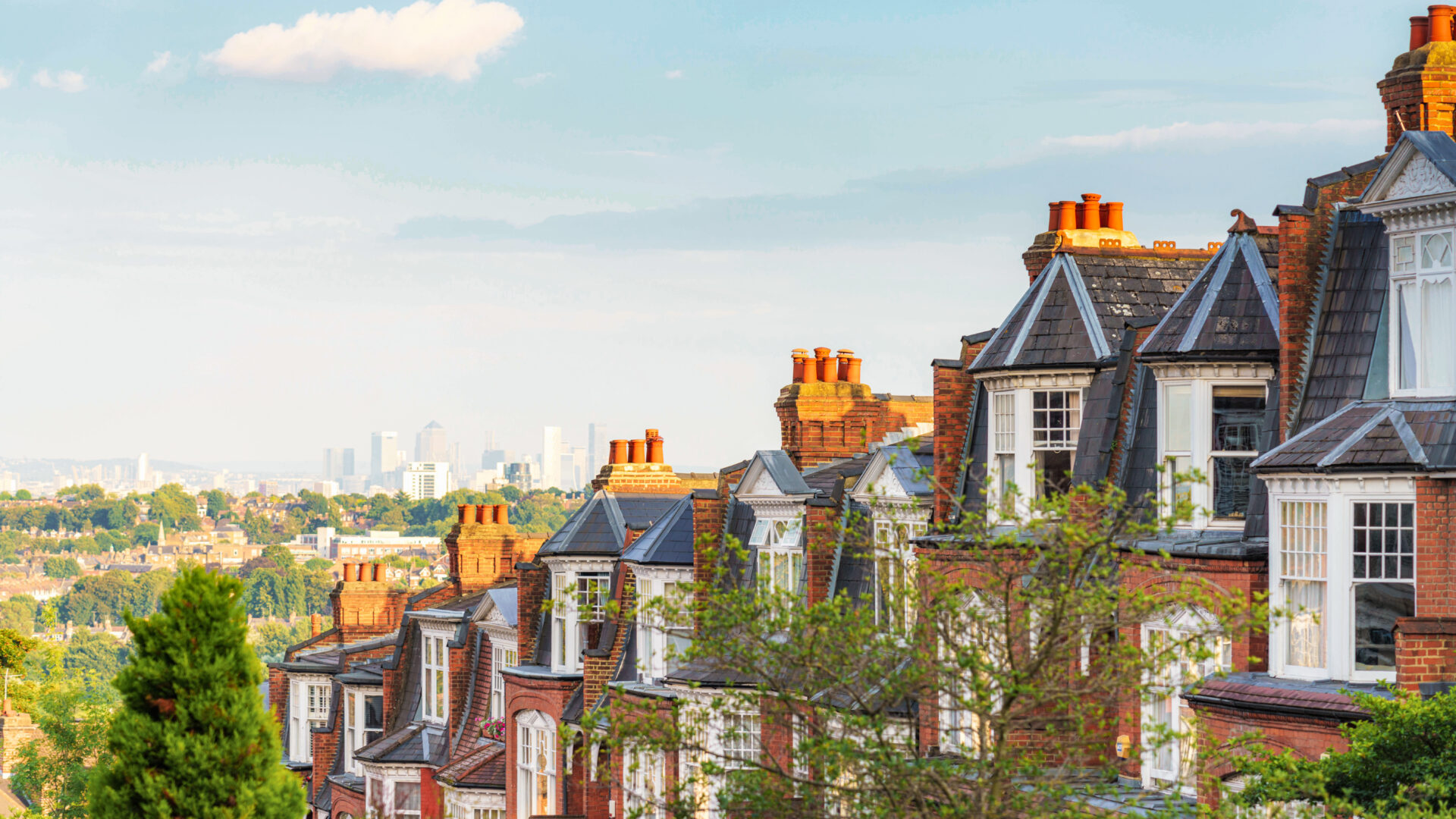
Source: HM Land Registry Price Paid Data — median sold prices over a rolling 12-month window
What Your Budget Buys
Source: HM Land Registry.
Schools in Crystal Palace
🏫 Primary
🏛 Secondary
Data: Ofsted, 2026
Transport & Commute: Crystal Palace
Commute Times
Source: TfL Journey Planner, 2026. All times are station-to-station (boarding to alighting); add 5–10 minutes for walking to your nearest station and waiting.
Crime & Safety in Crystal Palace
Top Concern
Source: Metropolitan Police via data.police.uk · Population: ONS Census 2021 · Updated monthly
The Numbers
Crystal Palace records a residential crime rate of 124 residents over 12 months to April 2026 (Metropolitan Police recorded crime via data.police.uk) — 4% below the London average, and a PAL safety score of 54/100. That is genuinely middling: only marginally below the London average, neither a low-crime haven nor an elevated area. The pattern behind the number is the Triangle’s evening economy — the bars, restaurants and Saturday-night footfall along the high street concentrate opportunity — set against quieter residential streets further out. The 12-month trend is Stable (+0.2%).
What the Data Tells You
The data tells a balanced story. Crystal Palace sits just below the London average — 4% below it, with a safety score of 54/100 — which places it squarely in the middle of the pack rather than notably low-crime. The largest category is Violence and sexual offences at 27%, a typical South London profile. This is not an area to label “safe” or “high-crime” — it is a middling neighbourhood where a lively hilltop high street sits alongside settled residential streets.
Street-Level Context
The pattern follows the evening economy. The Triangle — Westow Hill, Westow Street and Church Road, with their bars, restaurants and Saturday-night footfall — is the main focus for recorded incidents, exactly as you would expect of a hilltop strip that draws people out after dark. Move off the high street into the residential Victorian streets that fan out from it, and the picture is quieter and firmly suburban. The closer you live to the Triangle, the more of its evening texture you take on; the further out toward Anerley, Gipsy Hill or the Park-side streets, the calmer it gets.
What Residents Say
Residents draw the same line the data does: the Triangle is lively and sees the bulk of the evening incidents, while the residential streets are settled. The practical takeaway is straightforward. If you are renting or buying a flat above a Triangle shop, treat it as high-street living — keep an eye on valuables on a busy Saturday night and use a D-lock for any bike left near the station or the bars. If you are out on the quieter streets toward the Park or Anerley, the everyday experience is ordinary outer-suburban.
Unlock the Complete Crystal Palace Guide
You’ve seen the headline data. Get the full picture — detailed narratives, council costs, community character, and our editorial verdict.
- 🎓 In-depth school, transport & crime analysis
- 🏛 Council tax & parking costs
- 🏘 Community character & local vibe
- ⭐ Editorial verdict, value assessment & future outlook
- 📦 Moving practicalities
By unlocking, you’re happy for us to email you this guide plus the occasional helpful update from Property Around London. No spam — unsubscribe anytime.
Council Fees in Crystal Palace
Source: London Borough of Croydon, 2026
Crystal Palace Community Character
Source: Google Maps, OS Open Greenspace & editorial research, 2026

A hilltop indie village around a big park — affordable, Overground-linked, and famously split across five boroughs and their council-tax bills.
Crystal Palace is a hilltop village built around a big Victorian park — indie shops, the famous dinosaurs, and one of London’s best views. The average home sells for N/A.
Crystal Palace scores 0/100 on the PAL Score — our weighted rating across six core criteria that define what makes a London neighbourhood work for buyers.
How We Score
Each criterion is normalised on a 0–100 scale across every London neighbourhood we cover, so a score describes how Crystal Palace compares with the rest of the city, not an absolute mark.
The Breakdown
| Criterion | Score (/100) | What it means |
|---|---|---|
| Property Price Affordability | 0 | The draw: a Zone 4 hilltop with a park and an independent high street at an entry price below inner London. |
| School Quality | 0 | A genuinely good state offer anchored by Harris City Academy Crystal Palace, a current Outstanding secondary. |
| Safety | 54 | Middling — 4% below the London average, with the Triangle’s evening economy the main focus and quieter residential streets beyond. |
| Transport Connectivity | 0 | A fast Overground to Canada Water and direct Southern to Victoria, but no Tube and a hill to climb. |
| Green Space Access | 0 | The 200-acre park is the asset, though the lost-Palace site itself is faded and only now being restored. |
| Local Amenities | 43 | The score weights services density; it understates the Triangle’s independents, antiques and food scene. |
Scores use the PAL 0–100 scale, z-score normalised across all London neighbourhoods and displayed as integers. See the PAL Score Architecture for methodology.
What This Means
Affordability (0/100) is Crystal Palace’s highest mark and its honest headline — you get a hilltop, a 200-acre park and a real independent high street at a Zone 4 entry price that buys far less in inner London, which is why first-time buyers and priced-out families look here. Schools (0) come next, carried by Harris City Academy Crystal Palace, a current Outstanding secondary that is rare for the zone. Safety (54) and transport (0) sit mid-table: crime is 4% below the London average, middling rather than reassuring, and transport offers a fast Overground and direct Southern trains but no Underground and a climb to the Triangle from every station. Green space (0) reflects the park’s size honestly, while acknowledging the Palace site is faded and mid-restoration. The Local Amenities score (43) deserves a caveat: it weights services density, so it understates the Triangle’s independents, antiques and food scene, which make the place feel richer than 43 suggests. The resulting 0/100 is a Below Average score that rewards a buyer who wants character, a park and an affordable hilltop — and warns off anyone who needs a Tube or is banking on fast growth.
💰 Value Assessment
At an average of £435,000, Crystal Palace is one of the more affordable hilltop options in South London — flats average £373,649 and terraces £621,358 (HM Land Registry, 12 months to 2026). It sits above adjacent Penge (£416,875) and below Sydenham (£471,500). The market is flat: up just 0.9% over five years, neither falling like inner SW London nor booming. The affordability score of 59/100 is the highest of the six — the value is real, though a hilltop villa runs past £1.2m.
Our Recommendation
Who's Crystal Palace for?
Crystal Palace could be a strong fit if you:
- Commute to Canary Wharf or the East London corridor. The Overground (Windrush line) to Canada Water plus a Jubilee change reaches Canary Wharf in minutes — the area’s standout link.
- Want an independent high street, not chains. The Triangle’s food, antiques and indie shops give Crystal Palace a genuine character that its amenities score understates.
- Have school-age children. Harris City Academy Crystal Palace is a current Outstanding secondary (Ofsted, April 2025) — rare for a Zone 4 area, and a real draw.
- Want a big park on your doorstep. Crystal Palace Park runs to roughly 200 acres, with the 1854 dinosaurs, a boating lake and the National Sports Centre mid-restoration.
- Value a stable price over a hot market. Values are essentially flat over five years (+0.9%, HM Land Registry), so you negotiate rather than bid.
Think twice if you:
- Need the Underground at the end of the road. There is no Tube; it is Overground and Southern rail only, with a climb up to the Triangle from every station.
- Are banking on capital growth. Crystal Palace is up just 0.9% over five years, behind neighbouring Penge’s 5.2% (HM Land Registry).
- Want a single, predictable council bill. The five-borough split means a £630-plus Band D spread street to street, with the Croydon side near London’s highest at .
- Expect a polished, restored landmark park. The lost Palace site is faded, and the regeneration — though now under way — has stalled for years.
- Want a quiet, low-crime suburb. Crystal Palace is middling for crime, only 4% below the London average, with the Triangle’s evening economy the main focus for incidents.
The Real Picture
Crystal Palace is a hilltop village with a proper independent high street, a huge faded park and a five-borough postcode that complicates everything from bins to council tax. You move here for the Triangle, the Overground into east London, the Outstanding secondary and the view from the top of the hill — and you accept, in return, no Tube, a flat market, a climb home, and the admin of working out which borough you actually live in. For someone who wants character and a park over a rising price and a turn-up-and-go Tube, it fits beautifully. For a growth-chaser or an Underground commuter, it is the wrong hill.
Moving to Crystal Palace?
Get our free moving checklist and local tips delivered to your inbox.
No spam. Unsubscribe anytime.